Get info
1st Workshop on Climate Change
Date : 2023-10-03
Venue : OTOP Exhibition and Phyaram Sericulture Learning Centre, Piaram, Muang Surin, Surin Province
Agenda
Objectives:
1. To raise awareness on the climate change impacts on the silk mulberry farming
2. To introduce innovations/technologies for climate change adaptation for farmers
3. To introduce a soil preparation technique for silk mulberry farming
Target participants: 50 male and 50 female Phearam mulberry farmers and local officers
Climate Change Adaptation Planning and Technologies
Thailand’s northeastern people have been suffering from poverty due to drought and flood since the known history. The problem has been elevated by climate change, affecting the livelihood of farmers and the whole value chain of silk mulberry cultivation in Phyaram, a traditional mulberry silk cultivating community in Surin. Phyaram mulberry and silk worm farming community, about 1,000 acre, 23 kilometers off Surin Province, Northestern of hailand.Villagers had to survive with zero income. The proposed business model will use local wisdom to maintain the quality of silk floss residues fertilizer, as well as introduce weather forecast technologies and the concept of women’s roles in climate change adaptation activities that will assist them to become smart farmers. About 350 villagers in 115 families in Phyaram Community. Selection criteria will be those who cultivate silk mulber ry farms. Silk mulberry cultivation is a lifeline occupation for Phyaram villagers for several decades. About 151 women farmers with 130 Rai (51.3 Acres) of mulberry silk farm recently gathered and built a farmhouse to host young silkworms. They have been able to guarantee the price of the worms to prevent its value in the market. However, their annual income is varied. Some earn far below the minimum wage, some reach just above the poverty line, some have none at all when a flood and drought came.
Silk mulberry farmers in the target community will be aware of existing weather forecast technologies to assist them in climate change adaptation farming. They will learn to use them for their farms, blending in with existing local wisdom. This will serve to reduce loss from future natural disasters so that they can have sustainable livelihood. Plus, the introduction of inclusive, gender-responsive climate change adaptation concept will enable them to plan their activities with gender lens, which will help to strengthen their choices in climate adaptation options and financing. They will finally become “smart farmers” to share their success with others.
Mulberry farming innovation and technology for climate change adaptation
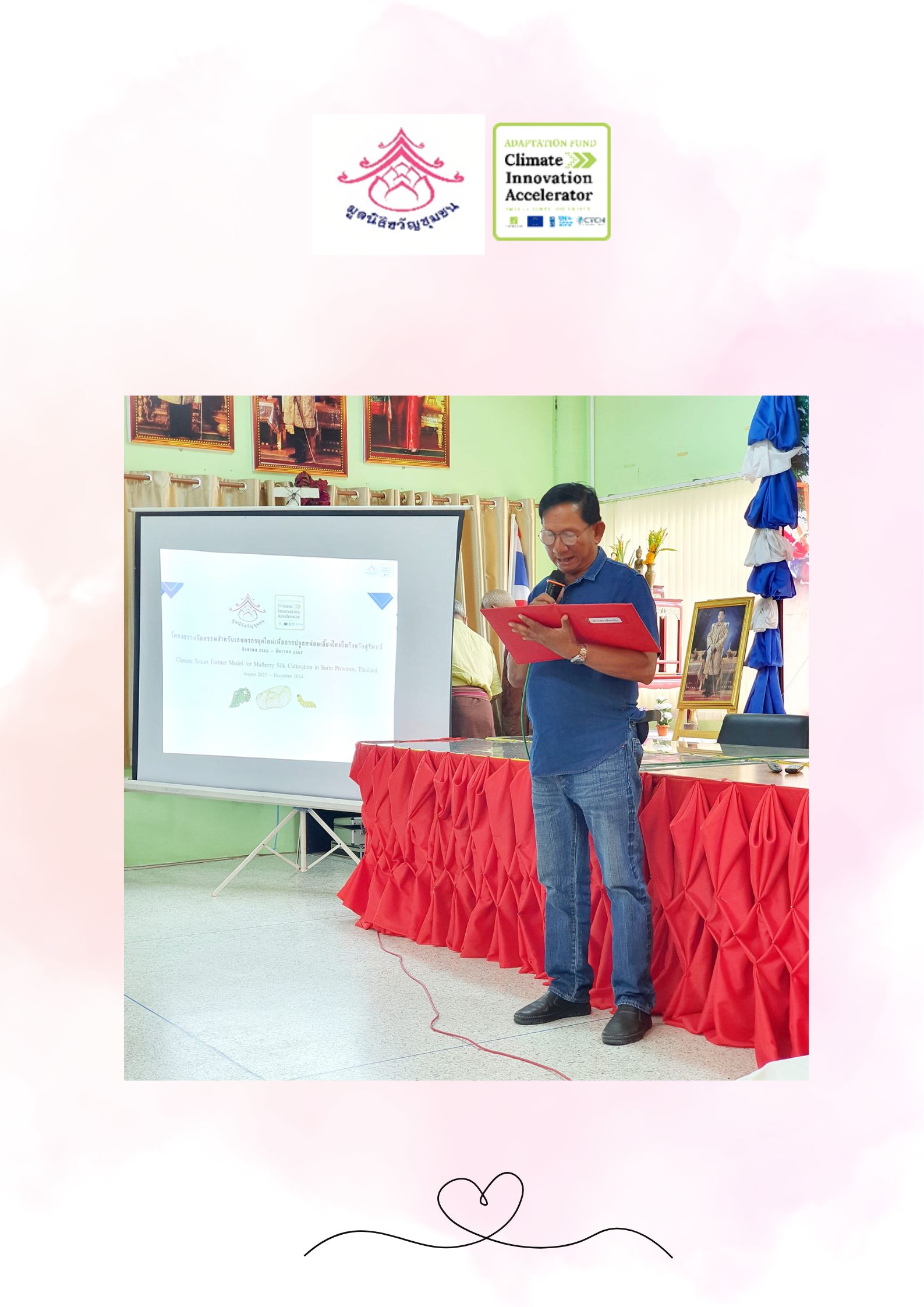
Upon a welcome remark by the Head of Phyaram Tambon Administrative Organization, the project manager introduced the participants to the project followed by an introduction to climate risk information.
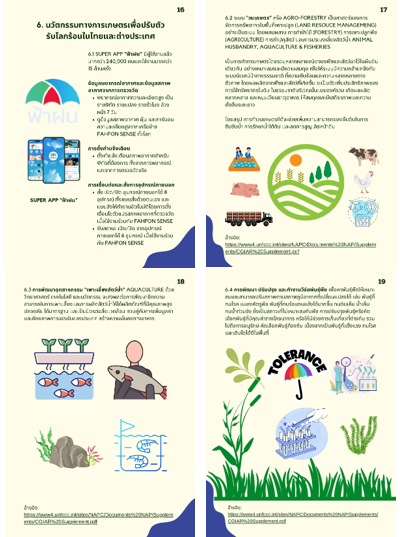
Introduction to "Fah Fon" Application and other five climate resilient innovation
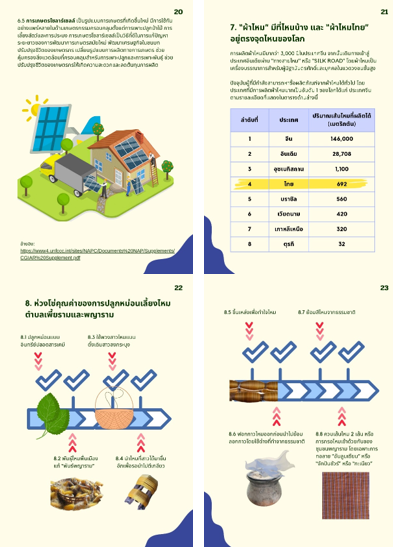
Once the participants were familiarized with basic information on climate change, its impact, and how to mitigate the impacts. The project manager, the Director of Surin Sericulture Centre, and the showed examples of farming innovations from around the world to the participants, so that they can relate to innovations which are likely to be useful and practical for them.
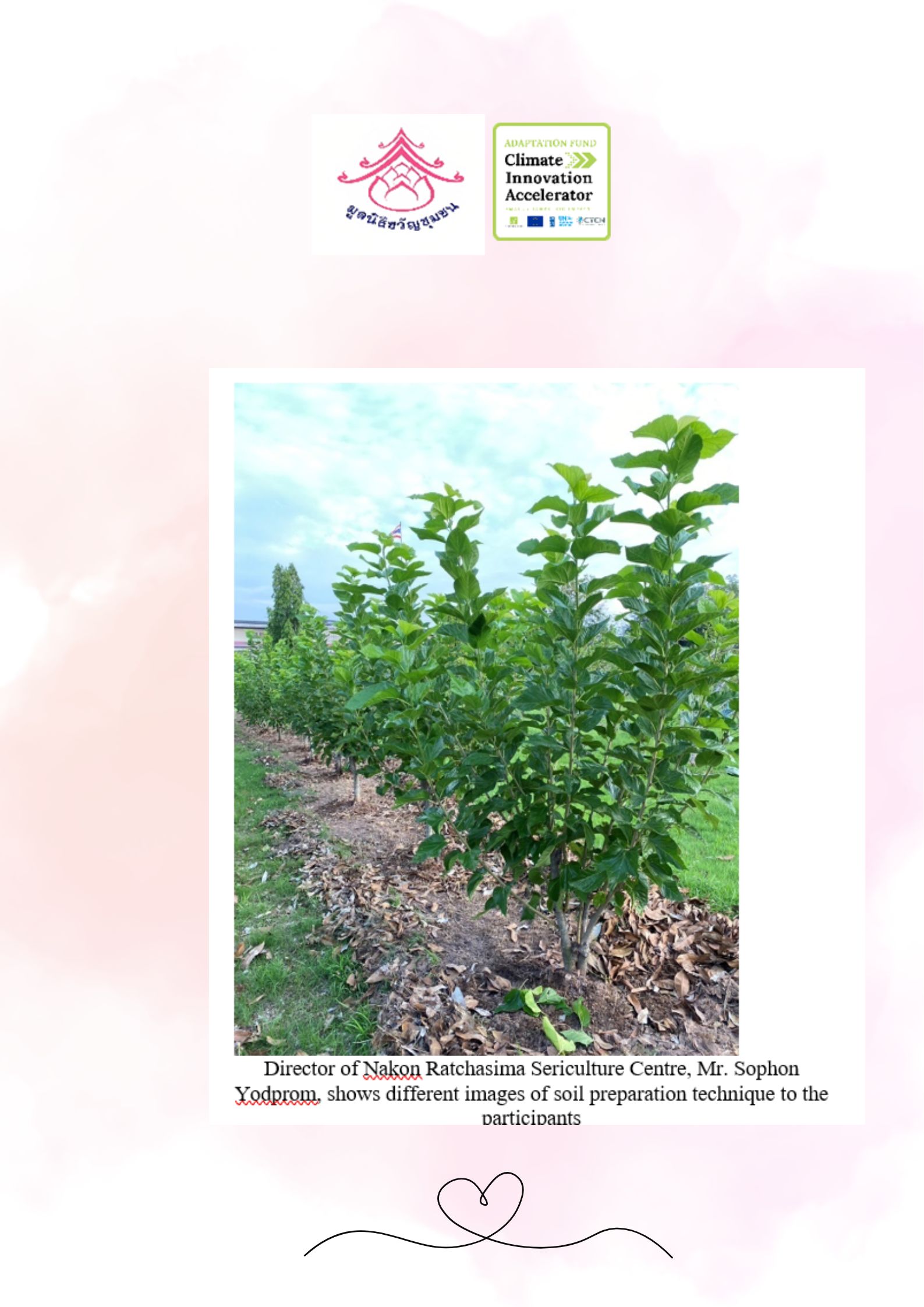
Introduction to soil preparation technique by Director of Nakon Ratchasima Sericulture Centre
-Selecting an area-
Mulberry is a plant that can grow well in almost every type of soil. But growing mulberry to produce mulberry fruit requires taking into account many different factors as follows:
· It must be an area that has not been flooded or flooded for a long period of time, has good drainage and has a deep soil surface.
· The soil is not acidic, or too alkaline. Soil pH should be between 6.0 – 6.5.
· Conditions: The ground must be an area that has no history of an outbreak of mulberry root rot disease, if there ever was one This history must be resolved by planting using durable rootstock against root rot disease.
· There is a water source that can provide water during the period. See if it rains during the rainy season or during the dry season, especially during January until April. The mulberry trees are in the process of flowering and harvesting, which will greatly affect the yield of the mulberry fruit.
· Convenient transportation area, able to work easily and transport mulberry products easily.
· Not too far from the market and the mulberry fruit processing industry. This is because mulberry fruits are easily damaged if transported periodically long and distant.