Get info
Silk mavens still weaving their spell
Detail
Sericulture alive and kicking in Surin's Phayaram village despite climate challenges.
PUBLISHED : 13 May 2024 at 05:46
WRITER: Jetjaras Na Ranong
Credit link:
https://www.bangkokpost.com/thailand/special-reports/2791657/silk-mavens-still-weaving-their-spell.
Thai sericulture is trying to adapt to the growth of
technology and the impact of global warming, with support from authorities and
overseas experts.
Phayaram, a small village in tambon Phearam of Muang
district in the northeastern province of Surin, is home to 122 households and a
population of 523 people.
The village was established in 1761 during King Ekkathat's
reign of the Ayutthaya Kingdom.
Agricultural wisdom, including rice farming, livestock
farming, sericulture and silk weaving, has been passed down in this community
for centuries.
Agricultural wisdom, including rice farming, livestock
farming, sericulture and silk weaving, has been passed down in this community
for centuries.
"Local folks continue to preserve their old
livelihoods, traditions and customs as well as supernatural beliefs, especially
the intellectual heritage of growing mulberries, and raising silkworms and
weaving silk, which is used from birth until the end of life," said
Yothaka Bunmak, head of the Sericultural Women's Group's Phayaram Community
Enterprise.
Every woman in the village must learn and master these
skills before getting married, she added.
Until very recently, mulberry cultivation and silk
production in Surin province depended on the mercy of Mother Nature.
Unless mulberry leaves were abundant, only scant numbers of
silkworms could be raised, yielding insufficient silk harvests.
The impacts of global warming also put sericulture at high
risk as silkworms are highly susceptible to rapid changes in the weather.
Such a condition can cause the silkworms to die, resulting
in the silk producers losing their income for the entire year.
Ms Yothaka said other natural disasters, such as inundation
and drought, also threaten the province.
Last year, the province developed the so-called Surin
Province Development Strategy (2023–2042), which focuses on adapting
agricultural production through modern knowledge and technology to upgrade
products' quality and value.
In April 2022, a development project called the Climate
Smart Farmer Model for Mulberry Silk Cultivation in Surin was initiated by the
Foundation for Community-Soul (FCS), a local organisation.
The project received financial support from the Adaptation
Fund Climate Innovation Accelerator (Afcia) under the United Nations
Development Programme (UNDP) and is running for 16 months, from August 2023 to
December 2024.
Orawan Yafa, the project manager, said the focus is on
promoting innovation to help farmers combat the possible impact of climate
change while protecting their long-preserved authenticity.
Organic mulberry leaf cultivation, traditional silk reeling
and native silk patterns are used in the training process.
Phayaram village has been envisioned as a future learning
centre for traditional mulberry silk cultivation.
The idea was inspired by Thailand's Jim Thompson Farm in
Nakhon Ratchasima and Japan's Tomioka Silk Mill in Gunma Prefecture.
Tomioka City is recognised by Unesco as a World Heritage
Site for its traditional mulberry silk cultivation and silk weaving.
Its silk mill is Japan's first modern silk factory for
processing silkworms.
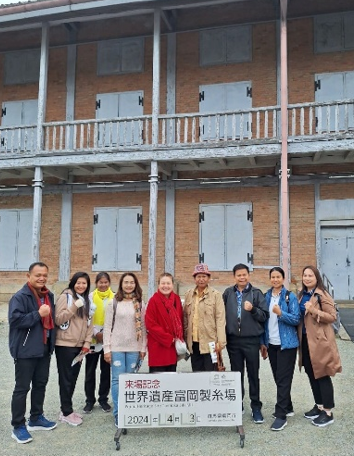
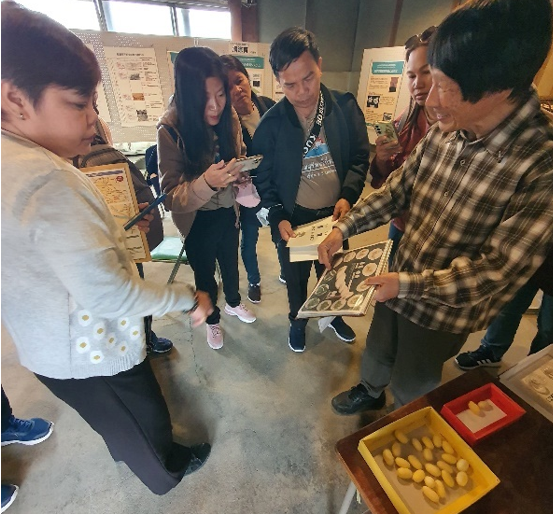
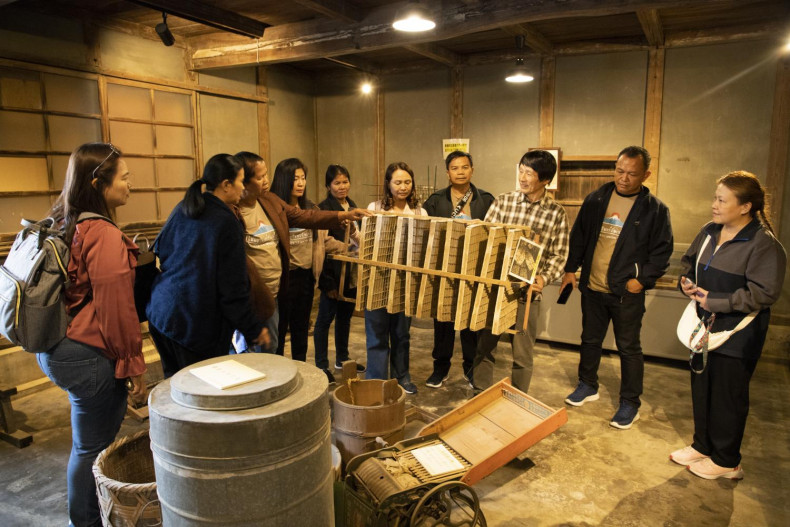
Miyake Setuko, 72, the mill's representative, told a
delegation of Thai silk farmers and media during their visit to Tomioka last
month that the 152-year-old factory once had as many as 556 women workers
operating 300 looms using silk weaving techniques from France.
The factory also houses Arafune Cold Storage, a natural
ancient-style depository that provides a perfect nursery for silkworm eggs and
enables the mass production of cocoons.
The storage chamber was created by piles of fallen rocks and
retained perfect air ventilation and cool temperatures, which are best for the
cocoons, regardless of the outside weather.
The Arafune storage was closed 70 years ago and replaced by
new technology.
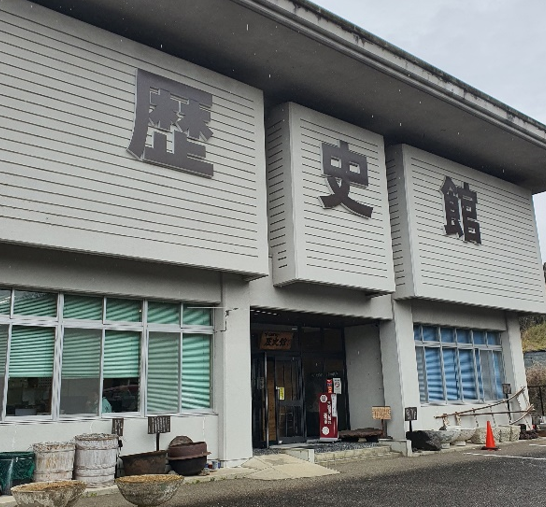
Aside from the silk mill, the group also visited the Tajima
Yahei Sericulture Farm, also in Gunma Prefecture.
The farm was once a residence of Yahei Tajima who developed
Japan's modern silk cultivation techniques called "seiryo iku".
The farm is also registered as a Unesco World Heritage Site.
"We could see from the visit that Japanese sericulture
knowledge is well-organised and carefully preserved," Ms Yothaka said.
"The tour gave us the inspiration to be open to
opportunity and learn to adapt," she added.
Ms Yothaka said Phayaram village developed its own silk
variety using organically raised indigenous silkworms, which yield shiny silk
threads with a soft and endurable texture.
Phayaram's silk, she said, is among the most expensive on
offer, priced at 3,000–4,000 baht per kilogramme.
The strong point of Phayaram silk is the traditional reeling
method. This involves using clay pots to maintain an optimal temperature,
resulting in consistently sized threads.
The community's silk production is chemical-free and
conservation-oriented in every step from the silkworm to the store shelf.
The community also uses natural dyes to produce naturally
beautiful colours that do not harm the environment for its treasured iconic
patterns, called Hoh, Saku and Amprom.
The weaving process also emphasises traditional weaving
techniques, which are crucial for the fabrics to be certified by Queen Sirikit
Sericulture Centre and granted royal insignias.
"Every piece of silk fabric we produce represents pride
in continuing our traditional profession and heritage.
"Now we must learn how to cope with global warming, to
preserve our livelihoods and identities as long as possible," Ms Yothaka
said.
Jittiporn Jindakaew, director of the Queen Sirikit
Sericulture Centre Regional Office 4 in Nakhon Ratchasima, said the centre has
supported community silk production, including skill development and mulberry
cultivation to enhance the value of the products in line with the policy of the
Ministry of Agriculture and Cooperatives for many years.
Type : News
Credit : Bangkok Post
Link VDO : Link
Link Refer : Link
File PDF : File PDF
Created At : 2024-10-06 15:57:56